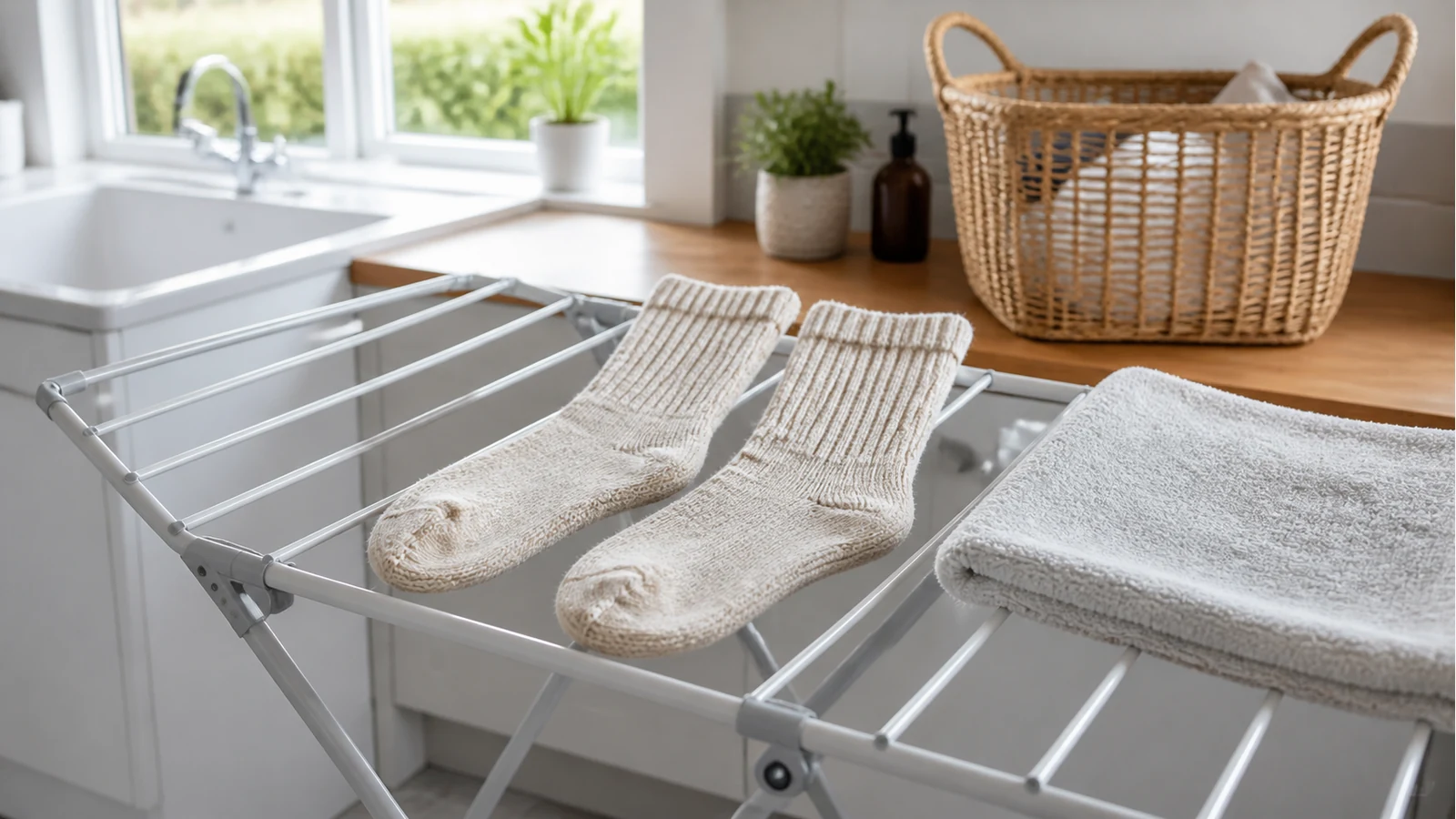
How To Wash Mid Calf Lounge Socks
Direct answer: wash mid-calf lounge socks gently, follow the garment label first, avoid heat unless the label allows it, and dry them flat when the care instructions call for it. The goal is not just cleanliness; it is keeping the cuff, knit and softness usable after repeated winter wear.
Care labels are not decoration. The Which? washing-symbol guide explains that the number inside the wash tub is the maximum washing temperature, and that a crossed tumble-dry symbol means the garment should not be tumble dried. For soft lounge socks, heat and rough handling are often the fastest way to lose the feel that made you buy them.
Care Checklist
- Read the label first. If it conflicts with general advice, the label wins.
- Wash similar colours together. New dark or coffee-coloured socks should not be thrown into a white wash.
- Use a gentle cycle at the stated maximum temperature. If the instruction is 30C gentle, do not treat 40C as close enough for every wash.
- Turn socks inside out. This reduces abrasion on the outer surface.
- Skip harsh heat. Do not tumble dry unless the label clearly allows it.
- Dry flat or supported. Hanging heavy wet cuffs from one point can stretch the shape.
- Store dry. Never fold away a damp pair; it invites odour and fabric stress.
What 30C Gentle Really Means
A 30C gentle wash is a maximum and a handling instruction. It means cooler water, reduced agitation and a lower-stress cycle. That matters for socks with a soft cuff or slouch shape because the comfort depends on the knit returning to shape. Overheating may clean aggressively, but it can also make the sock feel smaller, harder or less relaxed.
Why Flat Drying Helps
Flat drying supports the sock while water leaves the fibres. It is slower than tumble drying, especially in a damp UK winter, but it is kinder to soft knitted structures. If you wear the pair nightly, the practical answer is rotation: one pair in use, one pair drying. That is not overbuying when the care routine genuinely needs time.
Certification and Care Are Different Questions
The Soil Association GOTS resources summarises GOTS as covering areas such as traceability, chemical inputs, environmental management, labelling and product quality requirements, and the GOTS version 8.0 update notes that version 8.0 was released in 2026. Those standards can help a buyer understand textile claims, but they do not remove the need to follow the sock's own care label. A certified or organic claim does not make a garment immune to heat damage.
When to Stop Wearing or Replace a Pair
Stop using a pair as bed or lounge socks if holes appear at the heel or toe, the cuff no longer stays where it should, the sole has worn smooth enough to affect footing, or odour remains after proper washing. Also stop your usual wash routine if the pair changes texture quickly; reduce heat and agitation before the next wash, or accept that the socks have reached the end of their useful life.
Conditional Next Step
If you are checking care before buying, inspect the care expectations on the mid-calf slouch sock detail page and decide whether gentle washing and flat drying fit your habits. If you know you will tumble dry every load, choose a more forgiving everyday sock instead.
A Simple Rotation Plan
If a pair needs flat drying, plan the routine before it becomes annoying. Wear one pair, wash it inside out with similar colours, reshape it gently, then leave it flat with airflow around it. Do not balance the whole sock from the cuff on a radiator or hanger if that stretches the top. In a cold damp week, drying may take longer than expected, which is why a second pair can be practical rather than indulgent.
Care also affects safety. A sock with a thinning sole, loose heel or misshapen cuff may feel familiar but perform worse on the floor. Inspect the heel, toe and cuff after washing. If the sock twists, slides or feels shiny and worn underneath, retire it from walking use even if it remains soft enough for bed.
Reader Questions Answered Plainly
The useful test is whether the advice changes what you do next. If your situation is ordinary indoor cold, the next move is small and reversible: change the sock layer, change the walking layer, check the floor, and observe whether comfort improves over several normal uses. If the problem is persistent pain, numbness, colour change, wounds, repeated falls, or a care label you cannot realistically follow, the next move is not another product page. It is a different solution, a safer footwear plan, or appropriate professional advice.
There is also a budget test. A warmer or softer sock is worth considering only if it will be used often enough to matter. If it will sit in a drawer because it is too warm, too delicate, too slippery for the floor, or too hard to wash, the cheaper option is not really cheaper. The better purchase is the one that fits the reader's actual home routine.
For that reason, treat any product mention as conditional. The right answer may be the same socks, a different pair, slippers, a rug, a changed wash habit, or no purchase at all. A good decision leaves the reader knowing what to try today, what to check after trying it, and what evidence would change the decision tomorrow. Write that evidence down if the issue keeps returning, because repeated discomfort is easier to solve when you know the room, floor, sock, surface, lighting, mobility and timing pattern.
Sources used
When this check is not enough
Do not treat soft lounge socks as medical compression, certified fall prevention, footwear with grip, or a guaranteed way to reduce heating bills.
When to stop and choose another option
Stop and choose proper footwear or medical advice when floors are slippery, balance is uncertain, feet feel numb or painful, circulation is a concern, or the wearer needs non-slip support.
Stop Conditions
The article separates comfort shopping from medical or safety signals and tells the reader when to stop treating it as a sock choice.