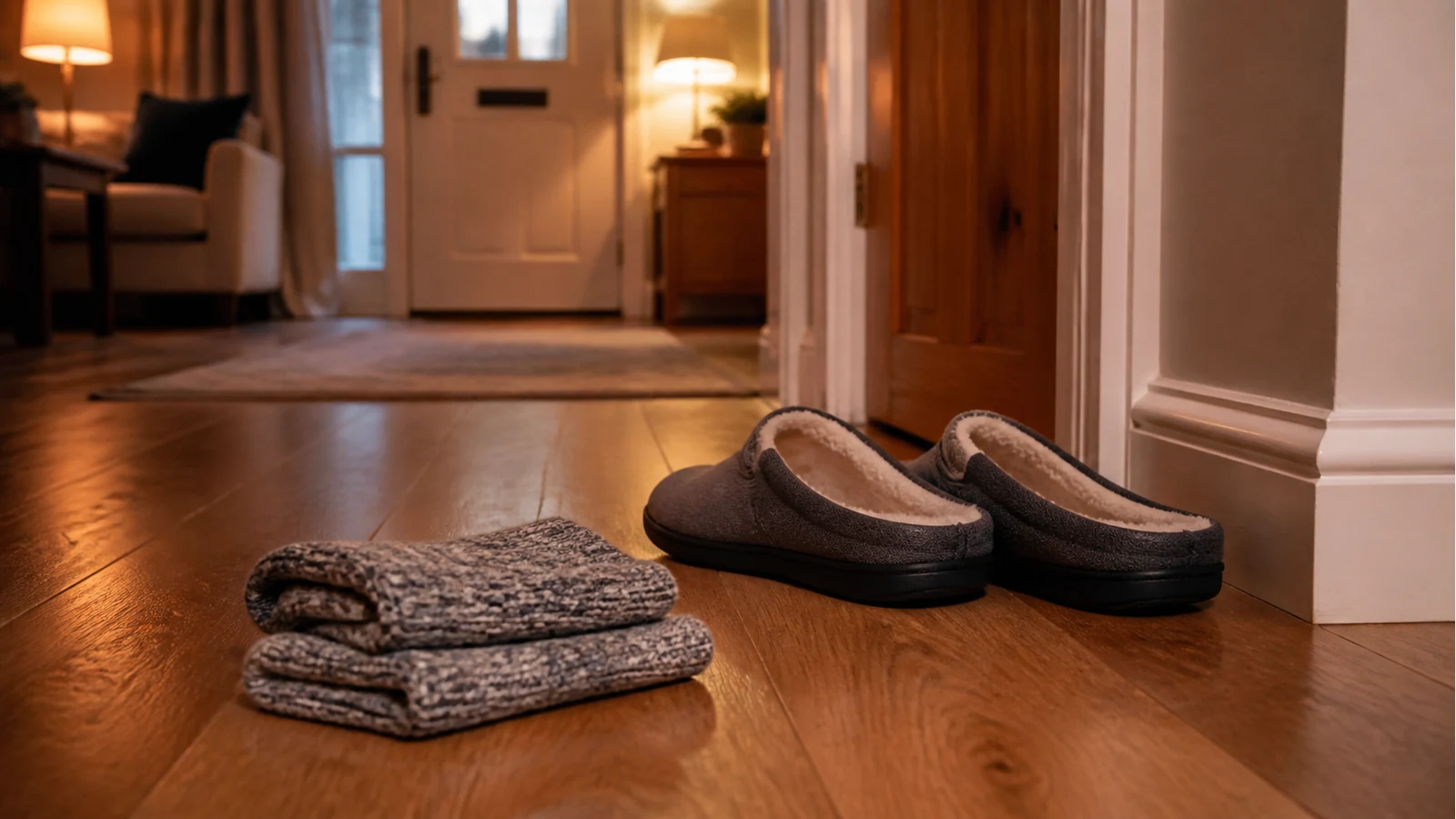
How to Wear Slouch Socks Safely Indoors: A UK Floor-Safety Checklist
Direct answer: slouch socks can be comfortable indoors, but soft socks without grip should be treated as warmth, not safety footwear. On dry carpet they may be fine for lounging. On smooth wood, tile, laminate, stairs or wet floors, add a grippy slipper, change route or do not walk in socks alone.
This is not about making the reader anxious. It is about matching footwear to the surface. The HSE slip and trip guidance explains that floor condition, contamination and footwear all affect slip risk, and the HSE health and social care falls guidance adds that lighting, flooring type, obstructions and user vulnerability matter. A sock can feel safe while standing still and still be a poor choice for a polished hallway at night.
Floor-Safety Checklist
- Dry floor: do not walk in soft socks on freshly mopped, spilled-on or condensation-damp smooth floors.
- Surface: carpet and rugs are lower risk than polished wood, tile and laminate, but loose rugs can create trip hazards.
- Lighting: switch on a light before walking to the bathroom or stairs.
- Route: clear charging cables, laundry, parcels and small furniture from the route.
- Grip layer: use slippers or grip socks when you need traction rather than just warmth.
- Cuff position: if the sock is pushed down into a slouch shape, make sure it is not under the heel or bunching underfoot.
- Stairs: use handrails and avoid rushing; if you feel unsure, change footwear first.
Pull Up or Push Down?
Slouch socks are often worn two ways. Pulled up, they cover more of the lower leg and are less likely to sit near the heel. Pushed down, they create a relaxed ankle shape, but the extra fabric must stay above the shoe line or ankle, not under the foot. If the fabric migrates under the heel, stop and adjust it while seated.
When Socks Alone Are Reasonable
Socks alone are most reasonable when you are sitting, standing beside the bed, or walking a short distance over dry carpet with good light. They are less reasonable when you carry hot drinks, rush to answer the door, walk downstairs half asleep, or cross a floor that has just been cleaned. The more tasks you add, the more traction matters.
Who Should Not Wear Soft Slouch Socks Alone
Do not wear soft slouch socks alone if you have a history of falls, balance problems, significant stiffness, poor night vision, or a home with polished floors and stairs. If you are buying for an older relative, do not assume cosy equals safe. Pair the gift with grippy house shoes or choose a sock designed with a grip sole.
Stop Conditions
Stop walking in socks alone if the floor is wet, polished, poorly lit or cluttered, or if you feel unsteady. Stop using a pair if the cuff slides under the heel, the sole has worn smooth, or the sock twists around the foot. Comfort should never require a risky walk.
Conditional Next Step
If you want a soft indoor slouch shape mainly for bed, sofa or desk use, the same-site detail page at mid-calf slouch socks is relevant. If the main job is safe walking on smooth floors, choose grip footwear first and treat slouch socks as the warming layer.
The Route Check
Before wearing slouch socks around the house, walk the route in your mind: bed to bathroom, desk to kettle, sofa to front door, laundry basket to stairs. Each route has a surface, a lighting level and a task. Carrying a hot drink on a smooth floor is different from sitting under a blanket. Going downstairs half asleep is different from standing beside the bed. The sock does not change, but the risk does.
The safest habit is to decide footwear before you stand up. If the route needs traction, put slippers on first. If the socks have been pushed down for a relaxed look, check that no fabric is under the sole. If the floor has just been cleaned, wait until it is dry or change footwear. These small pauses are more useful than treating "indoor" as automatically safe.
Reader Questions Answered Plainly
The useful test is whether the advice changes what you do next. If your situation is ordinary indoor cold, the next move is small and reversible: change the sock layer, change the walking layer, check the floor, and observe whether comfort improves over several normal uses. If the problem is persistent pain, numbness, colour change, wounds, repeated falls, or a care label you cannot realistically follow, the next move is not another product page. It is a different solution, a safer footwear plan, or appropriate professional advice.
There is also a budget test. A warmer or softer sock is worth considering only if it will be used often enough to matter. If it will sit in a drawer because it is too warm, too delicate, too slippery for the floor, or too hard to wash, the cheaper option is not really cheaper. The better purchase is the one that fits the reader's actual home routine.
For that reason, treat any product mention as conditional. The right answer may be the same socks, a different pair, slippers, a rug, a changed wash habit, or no purchase at all. A good decision leaves the reader knowing what to try today, what to check after trying it, and what evidence would change the decision tomorrow. Write that evidence down if the issue keeps returning, because repeated discomfort is easier to solve when you know the room, floor, sock, surface, lighting, mobility and timing pattern.
Sources used
When this check is not enough
Do not treat soft lounge socks as medical compression, certified fall prevention, footwear with grip, or a guaranteed way to reduce heating bills.
When to stop and choose another option
Stop and choose proper footwear or medical advice when floors are slippery, balance is uncertain, feet feel numb or painful, circulation is a concern, or the wearer needs non-slip support.