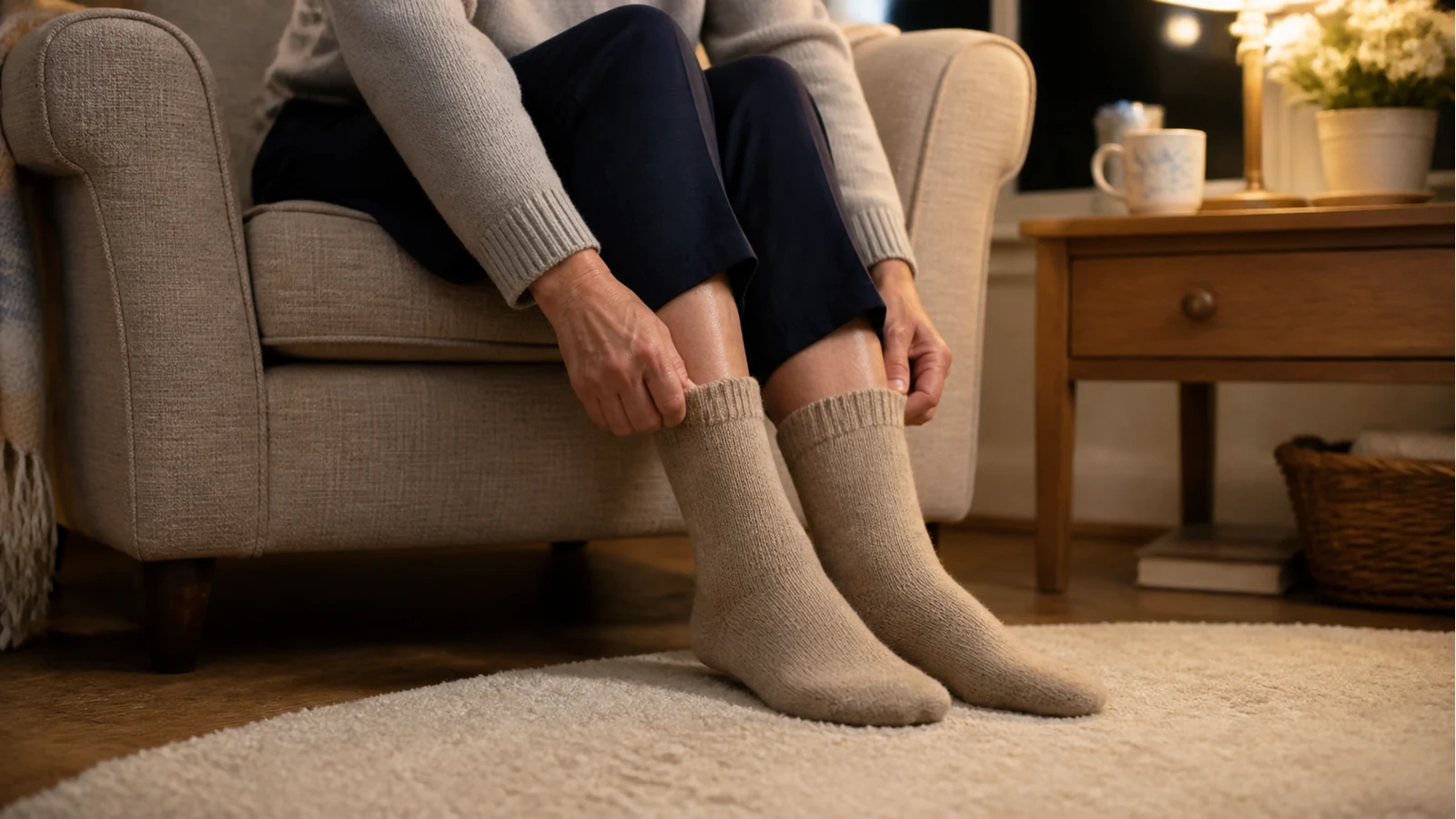
Non Binding Bed Socks For Women Uk
Direct answer: non-binding bed socks are a comfort choice for people who dislike tight cuff marks. They are not the same as medical compression socks, diabetic hosiery or fall-prevention footwear. In the UK home context, the right pair should feel easy to pull on, sit gently at the calf or ankle, and still be paired with safer footwear when floors are smooth.
The decision is especially important for older wearers, people with sensitive legs, and anyone buying for a mum or grandmother. A relaxed cuff can make evenings more comfortable, but a sock that is too loose can bunch. A soft sole can feel pleasant in bed, but it does not automatically make walking safer. The HSE health and social care falls guidance lists flooring type, footwear, lighting and user vulnerability as factors in slip and fall risk, so comfort and safety need to be checked separately.
Checklist
- Cuff feel: it should not leave a hard red ring after normal lounging, but it should not roll into a tight band either.
- Pull-on effort: the wearer should be able to put the sock on while seated without painful tugging.
- Fit range: check the stated shoe-size range and avoid guessing if the recipient sits outside it.
- Floor plan: if the wearer crosses wood, laminate or tile, add slippers or grip footwear for movement.
- Care routine: relaxed, soft socks often need gentler washing to keep the cuff and knit comfortable.
- Medical boundary: swelling, wounds, prescribed compression needs or diabetes-related foot concerns belong with a clinician or pharmacist, not a gift guide.
Non-Binding Does Not Mean No Support
A good relaxed cuff still needs structure. If it has no hold at all, it can slide under the heel or bunch at the ankle. If it holds too firmly, it defeats the point. The useful middle is a cuff that expands without biting and returns gently after wear. That is why a small amount of stretch can be helpful, provided the wearer is not seeking a medically controlled compression level.
Older Wearers and Sensitive Legs
For an older wearer, the best shopping question is not "is it warm?" but "can she use it safely in her actual room?" Consider where she puts the socks on, whether she walks to the bathroom at night, whether the floor is polished, and whether lighting is good. If she is unsteady, a lovely soft sock still needs a grippy slipper or a different footwear plan. If she mainly wears them in bed or while seated, cuff comfort may matter more than sole performance.
When to Choose Something Else
Choose something else if the wearer needs compression, has significant swelling, has foot wounds, has diabetes-related foot worries, or has frequent falls. The NHS peripheral arterial disease guidance describes symptoms such as non-healing wounds, numbness and cold colour-changing feet as reasons to seek medical attention. The NHS chilblains guidance also advises GP help for chilblains that do not improve, keep returning, show pus, or occur in someone with diabetes.
Stop Conditions
Stop using a relaxed-cuff sock as the answer if it leaves painful marks, increases swelling, makes the wearer less steady, or is used on a risky floor without grip. Also stop if cold toes are paired with colour change, pain or pins and needles; the NHS Raynaud’s guidance says very bad or worsening symptoms should be discussed with a GP.
Conditional Product Fit
The CosyCotton mid-calf slouch sock is relevant only if the reader wants an indoor relaxed-cuff style, accepts a no-grip limitation, and fits the stated women's UK size range. If those conditions match, the verified route is the product detail page. If the reader needs medical compression, exact orthotic support or grippy soles, it is the wrong next step.
The Two-Minute Fit Check
After putting the socks on, sit for two minutes with knees bent as you would on a sofa or bed edge. Then check three things: whether the cuff has rolled, whether there is a clear pressure line, and whether the sock has slid toward the heel. A faint temporary fabric mark is different from a painful indentation. If the wearer wants the sock off immediately, the cuff is not comfortable enough. If the sock cannot stay up at all, it may be too loose for practical use.
For a gift, do this thinking before purchase rather than after wrapping. Does the recipient usually complain about tight socks? Does she wear slippers? Does she have a safe seated place to dress? Does she need grip more than warmth? These questions are more respectful than assuming older women all want the same thing. Comfort is personal, and non-binding should mean easier wear, not vague sizing.
Reader Questions Answered Plainly
The useful test is whether the advice changes what you do next. If your situation is ordinary indoor cold, the next move is small and reversible: change the sock layer, change the walking layer, check the floor, and observe whether comfort improves over several normal uses. If the problem is persistent pain, numbness, colour change, wounds, repeated falls, or a care label you cannot realistically follow, the next move is not another product page. It is a different solution, a safer footwear plan, or appropriate professional advice.
There is also a budget test. A warmer or softer sock is worth considering only if it will be used often enough to matter. If it will sit in a drawer because it is too warm, too delicate, too slippery for the floor, or too hard to wash, the cheaper option is not really cheaper. The better purchase is the one that fits the reader's actual home routine.
For that reason, treat any product mention as conditional. The right answer may be the same socks, a different pair, slippers, a rug, a changed wash habit, or no purchase at all. A good decision leaves the reader knowing what to try today, what to check after trying it, and what evidence would change the decision tomorrow. Write that evidence down if the issue keeps returning, because repeated discomfort is easier to solve when you know the room, floor, sock, surface, lighting, mobility and timing pattern.
Sources used
- HSE health and social care falls guidance
- NHS Raynaud’s guidance
- NHS peripheral arterial disease guidance
- NHS chilblains guidance
When this check is not enough
Do not treat soft lounge socks as medical compression, certified fall prevention, footwear with grip, or a guaranteed way to reduce heating bills.
When to stop and choose another option
Stop and choose proper footwear or medical advice when floors are slippery, balance is uncertain, feet feel numb or painful, circulation is a concern, or the wearer needs non-slip support.
Decision Ladder
The relevant section gives a practical yes/no or compare-and-choose answer in reader language.
Decision Ladder
The relevant section gives a practical yes/no or compare-and-choose answer in reader language.
Decision Ladder
The relevant section gives a practical yes/no or compare-and-choose answer in reader language.
Decision Ladder
The article separates comfort shopping from medical or safety signals and tells the reader when to stop treating it as a sock choice.