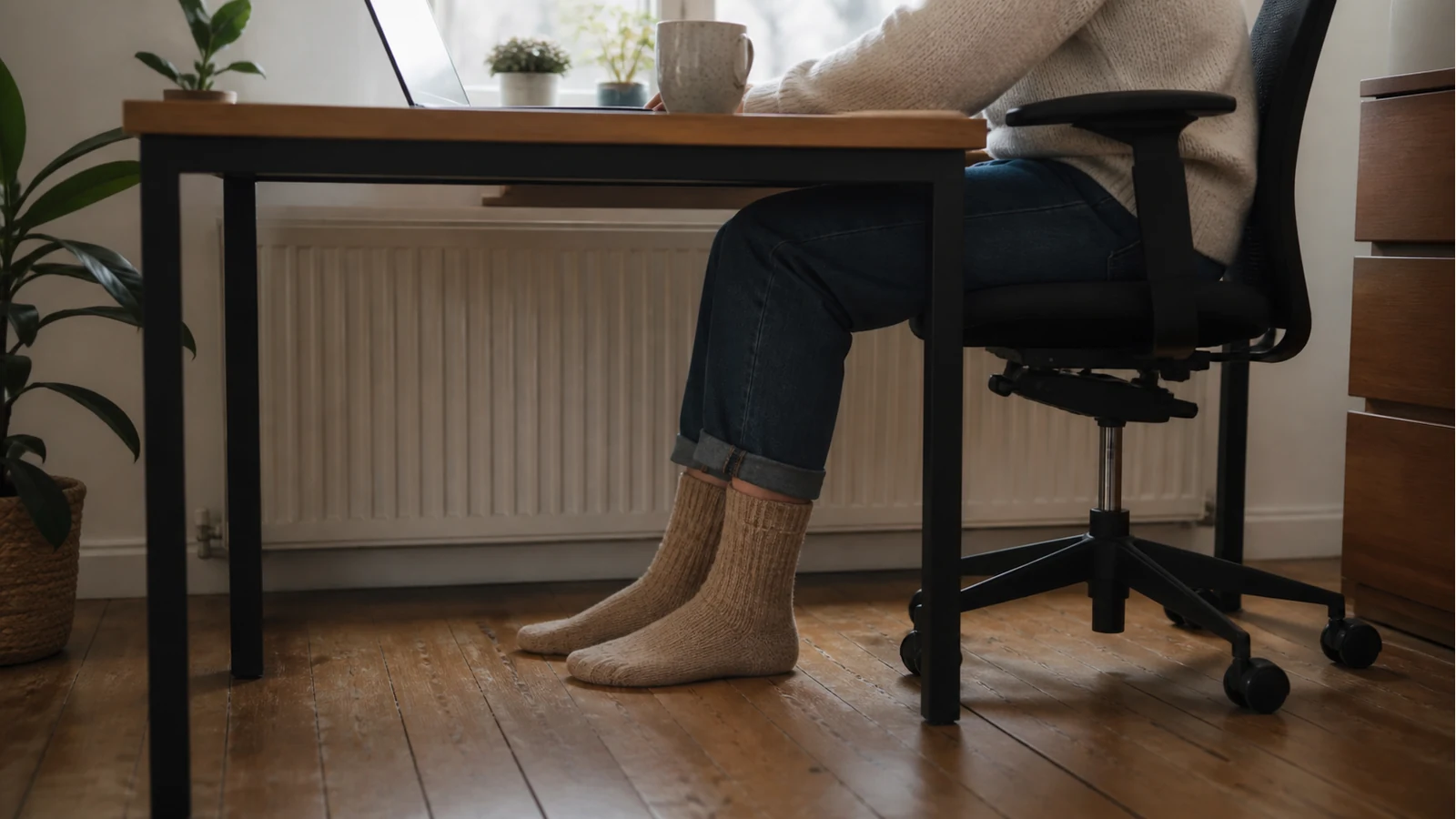
Warm Socks for Working From Home UK: A Practical Cold-Desk Guide
Direct answer: warm socks can be enough for working from home when the problem is ordinary cold-floor discomfort during long sitting, but they are only one part of the decision. In a UK flat or older house, the better choice may be socks, socks plus slippers, a local draught fix, or a small heating-control change. If your toes become painful, numb, pale, blue, or symptoms are getting worse, stop treating the problem as a shopping question.
The reason this decision matters is simple. A home worker can sit almost motionless for hours, so feet cool down faster than the rest of the body. Turning up the central heating for one cold desk can be expensive and blunt, especially in a rented property where you cannot improve insulation. The Energy Saving Trust central-heating advice says heating and hot water account for over half of a typical home energy use and recommends setting heating controls to the lowest comfortable level, usually 18-21C. Socks will not replace a safe home temperature, but they can be a sensible first layer for a local cold-feet problem.
Decision Ladder
- Start with the floor. If the floor is dry carpet or a rug under the desk, warm socks alone may be reasonable. If it is smooth wood, tile or laminate, treat socks as comfort rather than footwear and add slippers when you walk around.
- Check the cold pattern. Cold only while sitting at the desk usually points to stillness, draught and floor contact. Cold with pain, numbness, colour change or recurring leg pain is different and belongs in the stop section below.
- Choose the warmth type. Thick fleece can feel hot quickly but clammy later. A breathable knit is better when you want steady warmth through calls, typing and short breaks.
- Fix the microclimate. Move the desk away from a draught, add a rug, close the door to keep local heat in, and use heating controls rather than constantly raising the whole house.
- Use a safer walking layer. Soft socks without grip are fine for sitting, but use slippers with a proper sole for trips to the kettle, bathroom or stairs.
Socks, Slippers or Heating?
| Situation | Better first move | Why |
|---|---|---|
| Cold toes only under the desk | Warm breathable socks plus a rug | Targets the local cold spot without changing the whole home. |
| Smooth floor and frequent walking | Socks for warmth, slippers for movement | The HSE slip and trip guidance treats footwear and floor condition as part of slip-risk control. |
| Whole room feels cold | Check heating controls and draughts | Socks cannot make an under-heated room comfortable by themselves. |
| Feet sweat then feel colder | Choose breathable knit over bulky fleece | Dampness makes comfort unstable during long sitting. |
What to Look For in a Desk Sock
For desk work, the best sock is not automatically the thickest. Look for a mid-calf height that covers the ankle gap, a cuff that does not cut into the leg during sitting, enough stretch to stay in place, and a knit that feels breathable rather than plastic-like. If you are considering the CosyCotton mid-calf slouch sock, it only makes sense under those conditions: indoor use, a preference for relaxed cuff comfort, and willingness to use separate grip footwear on smooth floors. The verified detail route is the mid-calf slouch sock page.
Who Should Not Use This As the Main Fix
Warm socks are not the main fix if you cannot keep the room at a safe, comfortable temperature, if you have to cross slippery floors often, or if you need medical compression rather than relaxed comfort. They are also not the right answer for outdoor work, cycling, hiking or shoes that become tight when thick socks are added.
Stop Conditions
Stop and seek appropriate advice if cold feet come with recurring exercise-related leg pain, non-healing foot wounds, sudden worsening, numbness, or colour change. The NHS Raynaud’s guidance describes cold-triggered toe colour change, pain and pins and needles as possible Raynaud's symptoms, while the NHS peripheral arterial disease guidance says recurring leg pain during exercise should be discussed with a GP. For floor safety, stop wearing soft socks alone if the route is wet, polished, poorly lit or cluttered.
Practical Next Step
If the problem is ordinary desk chill, try the lowest-effort bundle first: warm socks while seated, a dry rug under the chair, a draught check, and slippers for walking. Only consider a product next when the fit range, cuff style, care routine and no-grip limitation all match your home.
A Practical Desk Trial
Run a two-day trial before buying multiple pairs. On day one, wear your current socks and note when your feet become cold, whether the floor feels cold through the sole, and whether you walk around in socks. On day two, add a warmer indoor pair or a second layer while seated, but use slippers when walking. If the main improvement comes from the rug or slipper, you have learned that floor contact and traction matter more than sock thickness. If the main improvement comes from a warmer breathable sock while seated, then a dedicated desk pair makes sense.
For rented homes, this approach respects the real constraint: you may not be able to change glazing, flooring or radiator location. You can still reduce the cold path from floor to foot and avoid using the central thermostat as the only tool. Keep the test honest. If hands, nose and whole body are cold, socks are not the primary answer; the room itself needs attention.
Reader Questions Answered Plainly
The useful test is whether the advice changes what you do next. If your situation is ordinary indoor cold, the next move is small and reversible: change the sock layer, change the walking layer, check the floor, and observe whether comfort improves over several normal uses. If the problem is persistent pain, numbness, colour change, wounds, repeated falls, or a care label you cannot realistically follow, the next move is not another product page. It is a different solution, a safer footwear plan, or appropriate professional advice.
There is also a budget test. A warmer or softer sock is worth considering only if it will be used often enough to matter. If it will sit in a drawer because it is too warm, too delicate, too slippery for the floor, or too hard to wash, the cheaper option is not really cheaper. The better purchase is the one that fits the reader's actual home routine.
For that reason, treat any product mention as conditional. The right answer may be the same socks, a different pair, slippers, a rug, a changed wash habit, or no purchase at all. A good decision leaves the reader knowing what to try today, what to check after trying it, and what evidence would change the decision tomorrow. Write that evidence down if the issue keeps returning, because repeated discomfort is easier to solve when you know the room, floor, sock, surface, lighting, mobility and timing pattern.
Sources used
- Energy Saving Trust central-heating advice
- HSE slip and trip guidance
- NHS Raynaud’s guidance
- NHS peripheral arterial disease guidance
When this check is not enough
Do not treat soft lounge socks as medical compression, certified fall prevention, footwear with grip, or a guaranteed way to reduce heating bills.
When to stop and choose another option
Stop and choose proper footwear or medical advice when floors are slippery, balance is uncertain, feet feel numb or painful, circulation is a concern, or the wearer needs non-slip support.
Decision Table
The article uses floor type, dryness, lighting, mobility and grip needs to decide whether socks alone are enough.
Decision Table
The relevant section gives a practical yes/no or compare-and-choose answer in reader language.